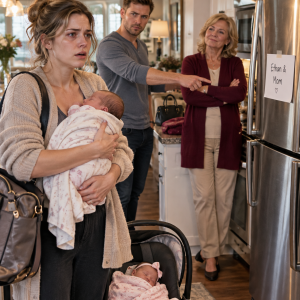
Diane’s expression shifted into gentle concern.
“Of course you have. You used my phone after breakfast.”
Caleb entered from the hallway almost immediately, as though he had been waiting nearby.
“What happened?”
“Nora doesn’t remember calling her aunt,” Diane said.
I opened my phone and showed them the call history.
“Because I didn’t call anyone.”
Caleb approached slowly and rested one hand on my shoulder.
“You were upset, honey. You said you heard your father talking upstairs.”
For several seconds, I could only stare at him.
“That never happened.”
“You were crying.”
“No, I wasn’t.”
Diane lowered her voice to a sympathetic whisper.
“Perhaps she needs to lie down.”
Their performance was subtle enough that anyone watching would have believed they were frightened for me. Caleb softened his voice, Diane avoided sudden movements, and both of them exchanged worried glances whenever I contradicted their invented version of events.
By lunchtime, three relatives had quietly asked whether I was feeling well. One cousin had heard that grief was making me confused. Another had been told that I had wandered through the house before dawn, calling for my father. Diane had even suggested that the emotional pressure of the wedding might have reopened wounds I had never properly addressed.
Every lie had been introduced before I knew I needed to defend myself.
I walked outside and telephoned my family physician’s office. After verifying my identity, the receptionist confirmed that Caleb had contacted them the previous day.
“He asked whether you had a history of severe anxiety, confusion, or imagined conversations,” she explained.
“Did you give him any information?”
“No. He isn’t authorized to access your medical records.”
Relief moved through me, but it lasted only a moment.
“He also said you had been hearing your father’s voice,” she added. “He sounded very concerned.”
That was when the full purpose of their behavior became clear. They were not merely spreading gossip among relatives. They were constructing a record, one conversation at a time, until enough people believed I was unstable that my own denials would seem like further evidence against me.
That evening, Caleb suggested postponing our honeymoon.
“You need time to recover,” he said as we stood in the kitchen.
“Recover from what?”
“Stress. Grief. Whatever is causing these episodes.”
Diane stood near the refrigerator, pretending to arrange containers while listening to every word.
“Are you concerned about me,” I asked, “or are you concerned about my father’s house?”
For a fraction of a second, the softness left Caleb’s face. Something cold appeared beneath it, then vanished behind a quick laugh.
“That’s ridiculous.”
His denial came too quickly, and Diane stopped moving altogether.
I forced myself to look embarrassed.
“You’re right. Forget I said it.”
Caleb’s expression softened again, and he reached for my hand.
“Let’s get you some rest.”
That night, I placed my phone beneath the bed, connected it to a charger, and left the recorder running.
At 1:40 in the morning, the bedroom door opened.
I kept my breathing slow and even.
Diane’s voice came from the darkness.
“Is she asleep?”
“Yes,” Caleb whispered.
“You’re taking too long.”
“We’ve only been married two days.”
“That’s why it must happen now. Everyone expects a new bride to be emotional.”
There was a short silence before Caleb answered.
“She’s becoming suspicious.”
“I told you the stain was too obvious, but you insisted we needed something upsetting.”
“You’re the one who brought the finger-prick kit.”
“And I disposed of it. Stop worrying about details that no longer matter.”
My hands tightened beneath the blanket.
The mark on the sheet had been staged. The strange sleeping arrangement, Diane’s supposed drunkenness, and the photograph of me on the sofa had all been designed to unsettle me before the larger performance began.
Then Diane mentioned the tablets.
“Tomorrow, put half in her tea. Voss said repeated doses will make her confused enough for people to notice.”
“What if she reacts badly?”
“She won’t. By the time anyone questions it, we’ll already have witnesses.”
Caleb remained silent for several seconds.
“And once I control her affairs?”
“You petition for the property.”
“What about the marriage?”
Diane’s answer came without hesitation.
“Once the house is secure, you can end it.”
I lay beside the man I had loved while the future I had imagined quietly disappeared. I wanted to sit up and demand an explanation, but I forced myself to remain still until Diane left and Caleb returned to bed.
At dawn, I sent the recording to Tessa.
Her response arrived within seconds.
“I’m contacting the authorities.”
“Give me one more day.”
“Nora, this is no longer about collecting better evidence.”
“I need to know what they’re giving me and who Voss is.”
She disagreed, but I had already decided to let Caleb believe the plan was succeeding.
The Tea Beside My Bed

At breakfast, I stumbled slightly as I entered the kitchen and pressed one hand against the counter.
Diane noticed immediately.
“You look unwell.”
“I didn’t sleep.”
Caleb moved toward me.
“Maybe you should go back upstairs.”
I lowered my voice.
“I keep hearing things.”
Their eyes met, and in that brief exchange, I saw unmistakable triumph.
Diane approached carefully.
“What kind of things?”
I looked toward the staircase and allowed my face to tighten.
“My father’s voice.”
Caleb swallowed.
“What does he say?”
I paused long enough to make them uncomfortable.
“He says someone in this house wants to take something from me.”
For the first time since the wedding, Diane appeared uncertain. The change lasted only a second, but it was enough to reveal how badly she wanted control over the story she had invented.
She reached for my hand.
“You need rest, dear.”
“I think you’re right.”
Caleb guided me upstairs and returned twenty minutes later carrying a steaming cup.
“Chamomile,” he said, sitting beside me. “Drink it while it’s warm.”
I brought the cup toward my lips, then deliberately tipped it across the blanket.
“I’m sorry,” I said. “My hand slipped.”