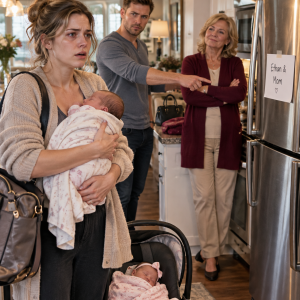
Being told to leave.
Michael didn’t react immediately.
He simply wrote several notes.
Finally he looked up.
“Arthur, are Daniel and Claire aware that nearly everything they use belongs to the trust?”
I almost smiled.
“I don’t think they’ve ever read a single page.”
He leaned back.
“Then they’ve probably mistaken access for ownership.”
The sentence stayed with me.
Access.
Not ownership.
There was a tremendous difference.

One Signature Changed Everything
Michael placed a short authorization form in front of me.
“Nothing dramatic,” he said. “As trustee, you have every right to suspend discretionary distributions while we review whether the trust is still being administered according to your intentions.”
I read every line carefully.
No tricks.
No hidden language.
Just one temporary instruction.
I signed.
Michael closed the folder.
“The bank will receive notice this afternoon.”
“What happens next?”
“Some payments may stop. Certain accounts may require your direct approval. They’ll probably call.”
I nodded.
“I’m not doing this to punish anyone.”
“I know.”
He looked toward the window before adding quietly,
“Sometimes boundaries feel like punishment only to people who’ve forgotten they existed.”
My phone rang before I reached the hotel parking garage.
Daniel.
I let it ring once.
Twice.
Three times.
Then I answered.
“Dad, something’s wrong.”
His voice sounded different.
Less confident.
“The bank froze one of our accounts.”
I unlocked my car but didn’t get in.
“Did they?”
“They said the trustee requested additional authorization.”
I watched people cross the street carrying lunch bags and coffee cups.
Ordinary Thursday afternoon.
Boston kept moving.
“Dad,” Daniel said again, “do you know anything about this?”
For the first time in a very long while, I answered without explaining myself.
“Yes.”
He fell silent.
And for the first time since Claire had pushed those muddy shoes across the floor toward me, I realized the balance between us had already begun to change.
My Son Tried to Take Control of the Trust
Daniel arrived at my hotel the next morning without calling first.
He looked tired.
His shirt was wrinkled, and for the first time in years, he wasn’t driving the black BMW parked in my driveway.
He stood awkwardly outside the lobby.
“Can we talk?”
I nodded toward two chairs near the window.
He sat down but couldn’t stay still.
“Dad, the mortgage payment didn’t go through.”
I waited.
“The BMW lease account is locked.”
Another pause.
“Claire’s business credit card stopped working during lunch with clients yesterday.”
He rubbed both hands together.
“Michael Wallace’s office told me everything has to be approved by the trustee.”
He finally looked me in the eye.
“Why are you doing this?”
I folded my hands.
“Why did you ask me to leave?”
He looked away.
“That was different.”
“Was it?”
Silence settled between us.
After nearly a minute, he stood.
“Claire thinks someone manipulated you.”
“No one did.”
“She doesn’t believe you’d ever do something like this.”
I nodded once.
“That’s the problem.”
They Tried to Prove I Couldn’t Make My Own Decisions
Three weeks later, Michael called.
His voice was calm, but noticeably firmer than usual.
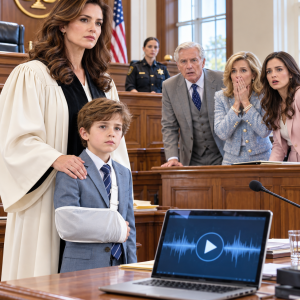
“Arthur, Daniel filed a petition with Probate Court this morning.”
I stopped watering the flowers outside my hotel balcony.
“For what?”
“He wants to become your legal guardian.”
The watering can stayed suspended in my hand.
“On what grounds?”
“He claims you’ve become mentally impaired and are no longer capable of managing your finances.”
I almost laughed.
Not because it was funny.
Because it was so absurd.
Michael continued.
“The petition includes a physician’s letter.”
“I’ve never seen that doctor.”
“I know.”
The following afternoon, I underwent a complete independent neurological evaluation at Massachusetts General Hospital.
The physician spent nearly two hours with me.
Memory tests.
Reasoning exercises.
Medical history.
A full neurological examination.
When he finished, he smiled.
“Mr. Willis, I wish half my younger patients scored as well as you did.”
Michael simply placed the report into a folder.
“That’s the only medical opinion the court is going to need.”