The Papers Beside My Newborn

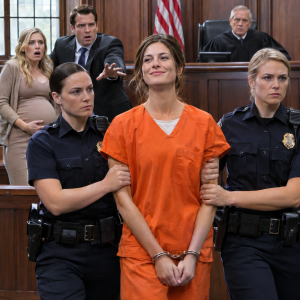
Three days after our daughter arrived, I learned that my heart had been seriously weakened by childbirth. I was still in a hospital bed, trying to understand what the doctors were telling me, when my husband placed divorce papers beside the baby’s blanket and said he would not spend his money keeping me alive.
For a few seconds, I couldn’t make sense of the words. My daughter, June, slept in the clear bassinet beside me, her tiny mouth pursed as if she were considering some private thought. A monitor kept time with a soft, steady beep. Beyond the windows, the afternoon was bright, the kind of clear fall day that makes the world look orderly even when yours has come apart.
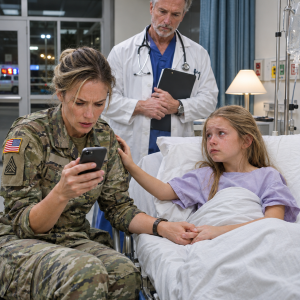
I was Nora Hale, a thirty-eight-year-old Army major assigned to a logistics command outside Columbus, Georgia. I had spent most of my adult life organizing people and supplies, solving problems under pressure, and making decisions when there wasn’t time to wait for perfect information. None of that helped me now. I was tired, frightened, and holding on to the belief that my husband, Blake, would stand beside me while I learned what came next.
My labor had lasted fourteen hours. When June was finally placed against my chest, she weighed just over seven pounds and had a dark tuft of hair that refused to lie flat. Blake held her briefly, then passed her back to the nurse and complained about the coffee in the cafeteria. I had smiled weakly, telling myself he was exhausted and didn’t know how to show what he felt.
The next morning, I tried to walk to the bathroom and found I could barely catch my breath. A nurse noticed the color fading from my face and called for help. By that evening, my ankles were swollen, my pulse had become unsteady, and lying flat felt harder than sitting up. The doctors ran tests and moved quickly, but nobody rushed to frighten me with an answer before they had one.
The following morning, Dr. Larkin, a cardiologist with kind eyes and a careful way of speaking, pulled a chair beside my bed.
“Nora, you’ve developed a condition called peripartum cardiomyopathy. The heart muscle has become much weaker after delivery, so it isn’t moving blood through your body as efficiently as it should.”
I looked past him toward June’s bassinet.
“Can it get better?”
“It can. We’ll begin treatment, monitor you closely, and give your heart time to recover. I can’t promise how quickly that will happen, but I want you to know that many women improve with care and rest.”
I nodded, absorbing what I could. My mind reached for the same tools I used at work: a plan, a schedule, a list of tasks. The doctors had the medical plan. I needed to follow it. I needed to get stronger. I needed Blake to help me care for our daughter.
He arrived that evening carrying a paper bag from a drive-through. He didn’t come to the bedside at first. He set the bag on the windowsill and glanced at his watch.
“How long are they keeping you here?”
“They’re still adjusting the medication. I’m not ready to go home yet.”
He frowned.
“What does all this cost?”
I reminded him that my military health coverage handled most of my care. He said there were always additional expenses, then asked whether I’d be cleared to return to work the next week. I was on parental leave, and I was still having trouble walking across the room. I tried to explain that, but he looked irritated, as though my condition were an inconvenient delay.
I told myself he was afraid. People didn’t always respond well when life changed without warning. Maybe he was trying to understand the practical details because the emotional ones were too much.
By Thursday afternoon, I understood how wrong I had been.
Blake entered my room holding a manila envelope. He set it on the bed, close enough that one corner rested against the edge of June’s pink blanket.
“I’ve been unhappy for a long time,” he said.
I stared at him, waiting for the rest of the sentence to make sense.
“You could have told me that before we had a baby.”
He looked toward the window.
“My attorney prepared the papers. If you sign them, we can keep this simple.”
My hands were shaking too badly to open the envelope. I asked him why he had never said anything before. Just a few weeks earlier, we had been in the nursery painting the walls a soft yellow. We had assembled the crib together, laughing over the instructions. He had held my hand during appointments and listened while I talked about names.
He offered no answer that helped me understand the husband I thought I knew.
“I’m not spending the best years of my life caring for a sick woman,” he said. “Take June and leave.”
Before I could reply, the door opened and Blake’s mother, Denise, came into the room. She was in her late sixties, with a carefully arranged silver hairstyle and a polished leather purse tucked beneath her arm. Her eyes went from the monitors to the oxygen tubing, then settled on me.
“This is a terrible situation,” she said.
Blake gestured toward the papers. Denise took out her phone.
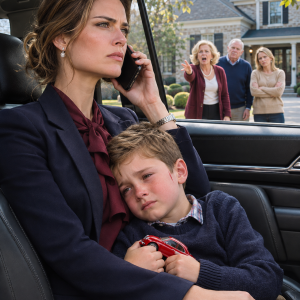
“I’ll call your parents. They can come get you.”
“Please don’t,” I said, trying to sit up.
The pressure in my chest made me stop. Denise ignored my plea and called my father. When he answered, she spoke as if she were arranging the pickup of an unwanted package.
“Martin, you need to come collect your sick daughter. Blake wants her out of the house.”
For a moment, nobody spoke. Then my father’s voice came through the phone, low and steady.
“Is Nora safe?”
Denise said I was in the hospital and told him not to make a fuss. My father asked to speak to me. She held out the phone.
“Dad?”
His voice softened at once.
“Sweetheart, what’s happening?”
I looked at Blake, who was staring at the floor, and then at June, still asleep beneath her blanket.
“I need you to come,” I whispered. “And bring the house file from the lockbox. Call Maren, too.”
Maren Bell was the attorney who had handled the paperwork when I bought my house. There was a pause on the line.
“We’re already on our way,” Dad said. “I’ll bring your mother. We’ll take care of the rest when we get there.”
The monitor beside me began to beep faster. A nurse hurried into the room, followed by another. The walls seemed to slide away as the pressure in my chest sharpened and my vision narrowed. Someone moved Blake and Denise into the hallway. A nurse adjusted my oxygen and called the doctor.
I heard my father’s voice in my mind, telling me to breathe slowly, the way he used to when I was a child trying not to cry after falling off my bicycle.
It took nearly an hour for my heart rate to settle. I was exhausted, and the medical team told me that stress had made the situation harder to manage. Blake and Denise were not allowed back into the room.
Thirty minutes later, three dark SUVs pulled into the hospital lot.
My parents arrived first, my mother close beside my father. Maren Bell came with them, carrying a leather briefcase, and a second attorney, Peter Nolan, followed with a thick folder under his arm. They looked less like visitors than people who had spent the drive making sure they were ready.
Blake saw them near the consultation room and gave a small, dismissive laugh.
“What is this, a parade?”
My father didn’t answer him. He turned to Maren and said, “Start with the house.”
A nurse wheeled me into the consultation room after the doctor agreed I could attend for a short time, as long as I rested and avoided any unnecessary strain. I sat beside my mother with a paper cup of water in my hands. Blake leaned back in his chair as if he had come to settle a routine disagreement.
“That house is mine,” he said. “I’ve lived there for nine years. We’ve been married almost as long.”
Maren placed a copy of the deed on the table.
“Then you may want to explain why your name isn’t on the title.”
Blake glanced at the document and gave a humorless smile.
“That’s a technical detail. We’re married. I’m entitled to half.”
Maren explained that the house had been purchased by me before our wedding, with money I had inherited and a mortgage in my name. The division of any shared contributions would be handled through the appropriate process, she said, but Blake could not simply declare the property his or order me out of it.
Denise leaned forward.
“My son paid the utility bills. He helped maintain that place.”
My father folded his hands on the table.
“Nora paid the mortgage, the insurance, and the taxes.”
Peter opened his folder. The records showed that I had bought the house in 2014 for a little over three hundred thousand dollars. A large portion of the down payment had come from an inheritance left by my grandfather, Silas Hale, with the remainder financed under my name.
Blake gave a short, bitter laugh.
“There it is. The inheritance.”
“You were there when we said goodbye to him,” I said. “You know where that money came from.”
Grandpa Silas had owned a hardware store in a small town outside Columbus. He wore old jackets until the elbows thinned and drove a pickup truck that had been patched more than once. He had not been showy with money, but he had saved carefully, and his bequest gave me the chance to buy a solid, modest house before I married.
I could still see the two of us walking through the empty rooms. He tapped his knuckles against the kitchen counter and nodded.