PART 1 — THE SLAP THAT SILENCED THE COURTHOUSE
The sound of Vanessa Collins’s palm striking my face echoed across the marble hallway of the courthouse in Houston, Texas, stopping conversations and turning several attorneys toward us.
My cheek burned, and I tasted blood where my teeth had caught the inside of my lip.
Vanessa stood directly before me, her expensive sapphire dress shimmering beneath the courthouse lights, while my mother-in-law watched with unmistakable satisfaction.
My husband, Nathaniel Whitmore, stood close enough to intervene but deliberately looked away.
“Don’t make a scene, Lauren, because we’re already attracting more attention than this situation deserves,” he muttered.
I looked at the man I’d once trusted with my future and felt something inside me finally settle.
My name is Lauren Whitmore, and I’d spent years being treated like an uneducated fortune hunter who had married into a powerful family for its money.
Nathaniel’s mother, Margaret Whitmore, never missed an opportunity to remind me that everything associated with our marriage supposedly belonged to her family.
Vanessa, the woman who’d replaced me in my husband’s affection, had become her favorite companion.
She stepped closer, apparently irritated that I hadn’t cried.
“When this hearing finishes, you’ll walk away with whatever Nathaniel generously allows you to keep, and nothing more.”
I touched the corner of my mouth with a tissue, then smiled.
That small expression unsettled her more than an argument would have.
She believed I was frightened because I’d accepted a preliminary settlement offering one modest property, limited financial compensation, and an extensive confidentiality provision.
The Whitmores considered the agreement generous, although their financial disclosures had been suspiciously incomplete.
They didn’t know that my acceptance depended on verified information and that my attorney had already identified serious discrepancies.
Before marrying Nathaniel, I’d graduated from a prestigious American law school, passed the bar examination, and built an independent legal career.
More recently, I’d been serving in a temporary administrative judicial capacity involving proceedings entirely unrelated to my divorce.
The Whitmores knew almost nothing about those accomplishments because they’d never cared enough to ask.
During our marriage, I’d gradually reduced my private practice to accommodate Nathaniel’s family obligations, while preserving my professional credentials and undertaking selected legal assignments.
Margaret interpreted my quieter public life as evidence that I had no career worth mentioning.
Nathaniel never corrected her.
Instead, he allowed Vanessa to accompany him to charity dinners, corporate celebrations, and investment gatherings while I remained increasingly isolated.
I had spent the previous year documenting financial irregularities, suspicious property transactions, messages, and statements that contradicted the family’s carefully constructed explanations.
My attorney, Rebecca Hayes, had helped me preserve the material through appropriate legal channels.
When a courthouse officer approached following the assault, I explained what had happened and requested that the security footage be preserved.
Vanessa suddenly appeared less confident.
“It was just an emotional disagreement, Officer, and I’m certain Lauren doesn’t want to make something unnecessarily serious out of it.”
I met her eyes.
“You struck me inside a courthouse, Vanessa, and I intend to provide an accurate statement about what happened.”
Then the courtroom doors opened, and the clerk called the parties inside.
Vanessa adjusted her dress and walked beside Margaret, apparently convinced that the humiliation would continue.
I followed them calmly.
They had no idea that the most consequential discovery of the morning was still ahead.
PART 2 — THE BLACK ROBE THEY NEVER EXPECTED
The courtroom was unusually quiet when we entered, and several members of the Whitmore family settled into the public seating area.
Nathaniel stood beside his attorneys, examining a folder containing the proposed divorce agreement.
Margaret whispered something to Vanessa, and both women glanced toward me with expressions suggesting they expected another effortless victory.
The judge’s chair remained empty.
I had completed a separate administrative assignment earlier that morning, and my duties required a brief exchange of official materials with court personnel before the family hearing began.
Wearing my judicial robe, I entered through the authorized staff passage near the bench, where the clerk was waiting to receive those documents.
For a moment, I stood behind the bench while arranging the handover.
Nathaniel looked up.
His expression changed so abruptly that one of his attorneys followed his gaze.
Vanessa straightened in her chair, while Margaret stared at my black robe with open disbelief.
Before anyone could misunderstand the situation further, I stepped away as Judge Eleanor Parker entered to preside over the divorce matter.
The clerk called the courtroom to order.
Judge Parker, a woman in her early sixties, explained that my temporary judicial assignment involved unrelated administrative proceedings and gave me no authority over my own case.
She confirmed that she would remain the independent decision-maker throughout the hearing.
I removed the robe, revealing my charcoal-gray dress, and joined Rebecca at our assigned table.
Nathaniel finally spoke.
“Lauren, why didn’t you ever tell me you were working in a judicial position after we married?”
I looked at him steadily.
“You never asked what professional responsibilities I continued handling, Nathaniel, and you rarely listened whenever I discussed my work.”
His embarrassment was obvious, but the revelation didn’t mean that my legal credentials could decide the case.
Rebecca began by notifying the judge of Vanessa’s assault and the report made to courthouse security.
Judge Parker emphasized that the allegation would be addressed separately through appropriate procedures and warned against intimidation or disruptive behavior.
Then Rebecca introduced our request for additional financial disclosure.
“Your Honor, the preliminary settlement discussions relied upon representations that omitted potentially significant ownership interests and transactions involving several related entities.”
Nathaniel’s lead attorney objected, arguing that I’d already accepted the essential financial terms.
Rebecca explained that no final settlement had been approved and that material financial disclosures remained subject to verification.
She presented corporate registration records identifying three entities associated with the family’s investment network.
One had been established during the marriage, another received unexplained transfers from jointly controlled accounts, and a third held interests in valuable commercial real estate.
Margaret interrupted before Rebecca could finish.
“Those companies belong to our family, and this woman has absolutely no right to question business arrangements she doesn’t understand!”
Judge Parker immediately instructed her to remain silent.
Rebecca then introduced a property-transfer authorization bearing what appeared to be my signature.
The document concerned a valuable commercial parcel associated with a large redevelopment project.
I had never signed it.
“We have reason to believe this authorization contains a forged signature, Your Honor, and we’re requesting preservation of the relevant records and appropriate forensic examination.”
Nathaniel stared at the document.
His attorney requested time to review the evidence.
Judge Parker ordered further disclosure and preservation of relevant financial materials, subject to the applicable procedures, before approving any final division.
For nearly two hours, the family that considered me helpless watched its carefully prepared settlement begin to unravel.
Yet the forged authorization was only the first piece of a much larger deception.
Related Posts

My Millionaire Husband Rushed Through Signing Our Divorce Papers Without Even Reading Them Because He Couldn’t Wait To Attend A Doctor’s Appointment With His Pregnant Mistress, Whose Baby He Called The Future Heir To His Family’s Fortune. While He Arrived At The Fertility Clinic Full Of Excitement, I Was Preparing To Take Our Children To Barcelona. But The Doctor Revealed Serious Questions About Whether He Was Actually The Baby’s Biological Father. Suddenly, The Man Who Had Been So Eager To Replace His Family Began Calling Me Over And Over Again…
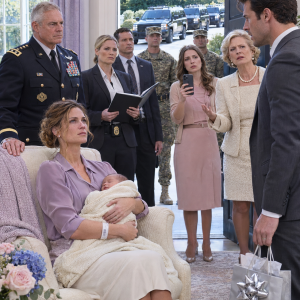
“Please, Take Me to the Hospital,” I Begged My Husband from the Kitchen Floor as He Called Me Dramatic and Left for His Mother’s Birthday; Two Days Later, He Returned Expecting to Hold Our Newborn—Then He Saw My Four-Star General Father Beside a Military Convoy, and My Sister-in-Law Reached for a Recording He Never Knew She Had Kept

“Get Her Out! She Has No Right to Be Here!” My Millionaire Father Shouted When I Walked Into My 14-Year-Old Brother’s Custody Hearing Still Wearing My Navy Uniform. He Had No Idea My Brother Had Secretly Begged Me for Help After Being Pressured to Sign Away Control of His Multimillion-Dollar Inheritance. Dad Smirked as His Attorney Tried to Have Me Removed, Certain He Had Already Won. But Then My Lawyer Pulled Out a Sealed Letter Our Late Grandfather Had Left Behind. The Moment Dad Recognized the Handwriting, His Smile Disappeared—and What the Letter Revealed Made Him Wish I’d Never Walked Into That Courtroom…

When My 72-Year-Old Ex-Mother-in-Law Broke Her Leg, None of Her Three Children Would Take Her In. Even Though I’d Divorced Her Son Five Years Ago, I Couldn’t Turn Her Away. “You Can Stay With Me. You’re Still Family.” I Cared for Her for Four Weeks, Never Suspecting She Was Keeping Something From Me. The Day She Left, My Neighbor Knocked on My Door, Holding an Old Shoebox. Her Hands Were Shaking. “Mara, You Need to Sit Down. There’s Something Your Mother-In-Law Never Told You.” What I Found Inside Made Me Cry for a Woman Who Had Risked Losing Her Own Children for Me.