PART 1 — THE NIGHT I RETURNED TO THE WRONG HOUSE
Twenty-eight days working offshore, followed by twenty-eight days at home, had been my routine for nearly a decade.
My name is Nathan Collins, and I worked as an offshore oil-rig technician in the Gulf of Mexico, earning enough to provide my family with a comfortable life outside Mobile, Alabama.
My salary paid our mortgage, my wife’s SUV, our son’s speech therapy, and nearly every household expense.
My eight-year-old son, Oliver, was smaller and quieter than most children his age, especially around unfamiliar adults.
But whenever we were together, he could talk for hours about school, his pet lizard, and the little wooden fort we had built beneath our backyard porch.
Every evening at seven, we connected through FaceTime while I was offshore.
During my latest rotation, however, those conversations became strangely brief.
My wife, Rebecca, frequently answered the telephone before Oliver could speak.
“He’s already asleep, Nathan. You know how exhausted children get after school these days.”
I found that explanation unusual because Oliver rarely went to bed before nine.
Whenever I questioned her, Rebecca accused me of worrying unnecessarily.
Then an approaching storm forced our offshore operation to shut down temporarily.
A helicopter transported our crew ashore two weeks earlier than expected.
I decided to surprise Oliver rather than announce my return.
At precisely 9:58 p.m., I pulled into our driveway and noticed an unfamiliar muddy pickup occupying my usual parking space.
The front door was unlocked.
Inside, the television played a football game at an unreasonable volume.
Two boys, approximately ten and twelve, sprawled across our sofa eating potato chips.
A heavily tattooed man slept in my favorite recliner, still wearing his work boots.
Then I noticed someone standing beside the kitchen counter.
My son was balancing on a chair while stirring macaroni in a saucepan.
His school clothes were stained, his hair looked neglected, and silver electrical tape covered much of his left forearm.
“Oliver, buddy, what are you doing awake this late?”
He turned so abruptly that I hurried forward to steady the chair.
For one beautiful second, his face lit up.
Then fear replaced his excitement.
“Daddy, you’re not supposed to be home yet. Please don’t tell anyone I was making dinner.”
I lifted him carefully onto the floor.
He felt frighteningly light in my arms.
Whatever had happened inside that house, I knew immediately that my son needed help.
PART 2 — THE STRANGER WHO THOUGHT HE OWNED MY HOME
I held Oliver close while examining the silver tape wrapped around his arm.
“What happened here, sweetheart? Did somebody help you when you hurt yourself?”
He glanced toward the sleeping stranger before whispering.
“I burned my arm, Daddy, but I covered it myself because I couldn’t find the bandages.”
I asked who had been supervising him.
His answer made my stomach tighten.
“Mr. Derek said dinner had to be ready before the game ended, or I’d have to sleep in the backyard shed again.”
The shed was a small storage building without proper lighting or comfortable sleeping arrangements.
I had built it to protect our lawn equipment from rain.
Before I could respond, the man in my recliner awakened.
He rose slowly and examined me with an amused expression.
“You must be Nathan. I’m Derek, a friend of Rebecca’s, and I’ve been helping around here.”
I stepped between him and Oliver.
“Where is my wife, and why is my son cooking dinner for strangers?”
Derek shrugged.
“She’s out at the casino with her friends. Somebody has to keep these kids occupied while she’s enjoying herself.”
He glanced dismissively at Oliver.
“Your boy needs discipline, anyway. He cries over everything and never seems capable of following simple instructions.”
The older boy laughed.
“Dad made him sleep outside on Tuesday because he wouldn’t stop crying.”
I felt an overwhelming urge to confront Derek physically.
Instead, I remembered that Oliver was trembling behind me.
I had spent years working around dangerous equipment, where anger and careless reactions could turn an emergency into a catastrophe.
I wouldn’t make my frightened child witness another frightening confrontation.
“Oliver needs medical attention, and I’m taking responsibility for him now. Keep your distance while I make arrangements.”
I moved my son away from the kitchen, contacted appropriate medical assistance, and arranged for his injured arm to be assessed.
I also began documenting the condition of the house and what I had personally witnessed.
Derek complained that I was exaggerating.
I ignored him.
Rebecca returned shortly after one in the morning, carrying the smell of cigarette smoke and strong perfume.
She stopped when she saw me.
“Nathan, why are you home? Your rotation wasn’t supposed to finish for another two weeks.”
I looked directly at her.
“Who is Derek, and why has Oliver been left cooking while he’s injured?”
Rebecca immediately became defensive.
“He’s someone who’s actually here when you aren’t. You spend half your life offshore, so don’t come home pretending you understand everything.”
She glanced at Oliver’s bandaged arm.
“He touched a hot pan because he’s clumsy. You always make ordinary accidents sound like emergencies.”
I didn’t argue.
By then, I understood that the truth was probably much worse than she was willing to admit.
PART 3 — TWENTY-SIX MESSAGES THAT NEVER REACHED ME

The following morning, while Rebecca slept, I searched our old home office for medical supplies and Oliver’s treatment paperwork.
Inside a drawer, I discovered my previous smartphone, the one I had replaced before my latest offshore assignment.
It no longer had an active cellular connection.
The screen illuminated when I pressed the power button.
An application was open to a folder titled FOR DAD.
Inside were twenty-six dated entries.
Every one was written by Oliver.
The first message read:
Day 1. Hi, Daddy. I’m writing something for you every night like you told me. Everything is okay today.
I remembered encouraging him to practice writing because his speech therapist believed short daily reflections could help him organize his thoughts.
Oliver had apparently continued the habit using my disconnected phone.
I scrolled toward the newest entry.
Day 26. Daddy, Mr. Derek hurt my arm because I burned the macaroni. Somebody put a paper on our front door, and Mommy cried when she read it. Mr. Derek said the bank might take our house because you don’t send enough money. Mommy told me not to tell you about the money. Please come home, Daddy. I’m not okay anymore.
I read those words repeatedly.
Then I sat on the office floor and cried.
For twenty-six nights, my little boy had been trying to tell me what was happening.
He had written to a telephone that couldn’t send his messages anywhere.
Meanwhile, Rebecca kept telling me he was sleeping peacefully.
I opened the earlier entries.
Day 9. Derek’s boys took my lizard away. They said he escaped, but I don’t think he did.
Day 14. I had to sleep outside again. It was dark, so I counted until one thousand.
Day 19. Mommy said if I told you anything, you would stop sending money, and we would lose our house.
Day 22. I miss you so much. I wrapped your old hoodie around my pillow because it smells like you.
I carefully preserved the notes and their available timestamps.
Then I found Oliver sitting at the breakfast table.
He watched me approach with the same nervous expression I had seen the previous evening.
Related Posts

At Halloween Dinner, My Sister Grabbed My 8-Year-Old Daughter—Then Mom Whispered, “Make a Sound and You’re Next.” I Called 911 Anyway… and the Call Captured Every Word

At 19, My Mom Kicked Me Out With Just $23.47 So My Pregnant Twin Sister Could Have My Bedroom. Twelve Years Later, She Showed Up at My Gate With a U-Haul, Three Kids, and an Order: “Open the Gate! We’re All Moving In!” She Was Certain I’d Give In Like I Always Had. But This Time, I Kept the Gate Locked—and What I Did Next Turned Every One of Her Plans Upside Down

I Came Home With Ivory Roses After Nine Days With My Mistress, Certain My Wife Would Forgive Me As She Always Had—But She And Our Newborn Were Gone, And By Morning, The Envelope She Left Behind Would Reveal A $12 Million Secret That Could Destroy My Life.
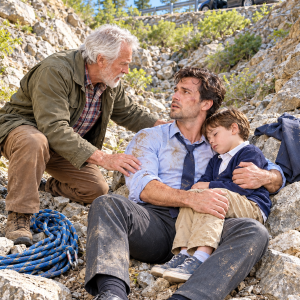
“Dad, The Old Quarry… Please Find Oliver Before It’s Too Late!” My Thirty-Five-Year-Old Son Whispered During A Desperate Phone Call At 4:50 A.M. Three Hours Later, I Found Him At The Bottom Of An Abandoned Quarry, Using His Injured Body To Shield My Unconscious Seven-Year-Old Grandson. As I Knelt Beside Them, He Opened His Eyes And Whispered, “It Was Charles… My Father-In-Law Did This Because I Refused To Destroy The Evidence…”