PART 1 — THE NOTE AT MY WIFE’S GRAVE
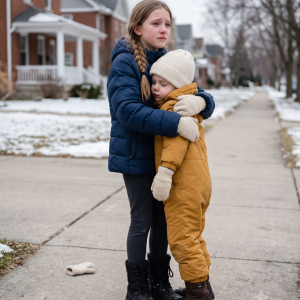
Two little girls were kneeling at my wife’s grave when the older one looked up and asked whether I was the husband who had never come to meet them. Before I could answer, their aunt hurried between the headstones and told her to stop talking. The younger girl left a foil-wrapped chocolate beside Caroline’s name, and tucked inside it was a message neither child had dared hand me.
I had brought white lilies for Caroline’s birthday, the second since the accident. The older girl, perhaps nine, was wiping rainwater from the lettering with her sleeve. Her little sister stood beside her, holding an umbrella that kept turning inside out.
“Happy birthday, Mommy Caroline,” the little one whispered.
I stopped several feet away. “You knew my wife?”
The older girl rose and moved closer to her sister. “She came on Thursdays. Sometimes Saturdays, too.”
“What’s your name?”
“Emma. This is Sophie.”
Their aunt arrived before I could ask anything else. She put a hand on Emma’s shoulder and steered her away from the stone.
“I told you to wait by the car.” Then she recognized me, and her expression changed. “Mr. Whitmore. I’m sorry. Caroline used to volunteer where they stayed. Sophie gets confused about people.”
Sophie looked down at her shoes. Emma watched the woman’s hand.
“And you are?”
“Their aunt, Denise. I’ve had them since last year. We’re doing the best we can.”
I noticed Sophie’s sneakers were soaked through and Emma’s coat wouldn’t close. I offered Denise cash for dry clothes and lunch, which she accepted while explaining how expensive children were. Before they left, Emma looked back at me without waving.
At the grave, I picked up the chocolate before it could slide into the wet grass. Its foil opened around a folded scrap of notebook paper.
“Mommy Caroline, please get us out.”
I stood there reading it until the rain blurred the ink.
THE ROOM I HAD KEPT CLOSED
That evening, I opened Caroline’s studio for the first time in thirteen months. Her brushes still stood in a chipped coffee mug, and a cardigan hung over the chair. I had paid someone to clean every other room while insisting that this one remain untouched.
Inside a sketchbook, I found the girls.
Emma reading to Sophie. Sophie asleep against Caroline’s shoulder. Both of them smiling outside St. Anne’s Family Center, a residential program Caroline had supported for years.
Under the sketchbook was a packet from a family-law attorney. The cover said “Adoption consultation,” dated eight days before the accident. A handwritten letter lay inside.
“Daniel, before you tell me this isn’t the right time, I need you to meet them.”
I sat in her chair and read the sentence again. For years, every conversation about children had ended with me promising we would discuss it after the next acquisition, the next move, the next difficult quarter. Caroline had apparently stopped asking for a decision and started asking for a meeting.
The letter wasn’t finished. Neither was the application.
I called the attorney named on the packet the following morning. Rebecca Lane remembered Caroline immediately.
“She wasn’t concealing a completed adoption,” Rebecca said. “She wanted information before she spoke to you. You would both have needed to participate.”
“Did she talk about these particular girls?”
“Almost exclusively.”
I told her about the cemetery and read the note aloud. She asked me to photograph it, preserve the original, and report the concern to county child services.
“If you think they’re in immediate danger, call the police,” she added. “Don’t wait for me to build a case.”
“I don’t even know where they live.”
“Then let’s start with what you do know.”
I gave her Denise’s name and a description of the car. Before lunch, I had made the report and authorized Rebecca to review Caroline’s charitable records. I put the chocolate wrapper in a clear sleeve, keeping the paper inside.
For the first time since the accident, I had something to do that couldn’t be delegated and forgotten.
WHAT CAROLINE HAD BEEN PAYING FOR
Caroline’s accountant found a standing payment of $2,500 a month from a separate account she had funded for the girls. The money had originally gone through St. Anne’s for clothing, tutoring, counseling, and expenses beyond what the program covered. After Denise received temporary kinship custody, the payments had been redirected to her.
The transfers continued because Caroline had established them in advance. I had signed stacks of estate documents without asking what each recurring payment supported.
“So my wife’s money has been going to this woman for a year?” I asked.
The accountant nodded. “There was enough in the account to continue. Nobody instructed us to stop.”
Rebecca contacted the agency administering the fund. They had received expense summaries and school information from Denise, but several details needed checking. A caseworker was assigned to investigate my report.
I couldn’t obtain confidential records merely because I paid the bills. What I could do was ask Denise how the children were doing.
She answered on the third call.
“I wondered when you’d get in touch,” she said. “Caroline always understood that raising children takes more than pocket change.”
“I’d like to bring them some coats.”
“You could just send the money.”
“I’d rather ask them what fits.”
After a pause, she gave me an address in a suburb outside Philadelphia. I told Rebecca where I was going and arranged to call afterward.
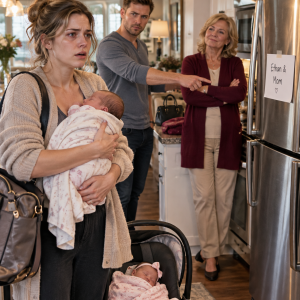
Denise’s apartment had a large new television, two shopping bags beside the couch, and a small space heater near Sophie’s mattress in the dining area. Sophie was coughing. Emma brought her water before anyone asked.
“She’s had a cold,” Denise said. “Kids get sick.”
“Has someone checked her?”
“We’re waiting for an appointment.”
Her partner, Rick, lowered the television volume without getting up. “You planning to inspect the whole place?”
“I’m asking about her cough.”
Denise folded her arms. “You show up once and suddenly you know how to raise them? Your wife didn’t talk down to me.”
I looked at Emma, who had stopped beside the mattress. “Could I take Sophie to urgent care?”
“I said I’m handling it.”
I left money for groceries and offered to pay the clinic directly. Denise promised to take her that afternoon. Outside, I called the caseworker and reported the cough, the sleeping arrangement, and the refusal.
The next morning, Denise texted that Sophie was much better. When I asked which clinic they had used, she changed the subject to an overdue utility bill.
EMMA’S SECOND MESSAGE
Two days later, I returned with coats, groceries, and a clinic appointment Denise had finally agreed to. Rick opened the door wearing new sneakers. Behind him, Sophie was still coughing, and Denise was folding clothes into a suitcase.
“Going somewhere?” I asked.
“My sister needs me for a couple of days.”
“Are the girls going?”
“Why does everything have to be an interrogation?”
Emma carried a glass of water toward me. She bumped the table, spilling some onto my sleeve, and apologized so quickly that I barely understood her. When I bent to help with the glass, she pushed a folded napkin into my coat pocket.
I stayed long enough to confirm Denise was no longer taking Sophie to the appointment. Then I went downstairs and opened the napkin in my car.
“Please help Sophie. Aunt Denise says a family will pay to take her. I don’t know if I get to go.”
I called Rebecca, who told me to contact the caseworker and police immediately. While I was on the phone, Denise and Rick came out carrying luggage.
There were no children with them.
I watched them load the car and pull away. When I knocked upstairs, Emma answered through the door.
“She said we can’t open it.”