PART 1 — THE DINNER THAT MADE ME STOP PAYING
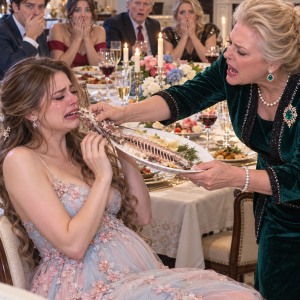
The instant my daughter’s fiancé looked directly at me across that restaurant table and said, “If you don’t like my mother’s comments, pay the check and leave,” I knew the evening had moved beyond an awkward family dinner. What I did not know yet was why a conversation about my house seemed to matter so much to three people who did not live there.
My daughter Natalie sat beside him with her eyes fixed on her plate.
That was the part I remembered most clearly afterward. Not Preston’s voice, not his mother Deborah’s little smile, but the fact that my only daughter heard the man she planned to marry speak to me that way and apparently decided silence was safer than disagreeing with him.
I was sixty-one and had spent most of my adult life believing family peace depended on whichever person was mature enough not to make a scene. Since my husband David died six years earlier, that person had usually been me. Natalie was our only child, and after losing her father at twenty-three, she had leaned on me more than I minded admitting.
At first, I had liked Preston. He was thirty-two, worked in commercial real estate, remembered birthdays, carried grocery bags without being asked, and had the polished confidence of a man who could make an opinion sound like a fact. The trouble began gradually enough that I kept finding reasonable explanations for it.
He stopped treating my house like a place he visited and started treating it like a property he was evaluating.
One afternoon the previous summer, I had come inside for my gardening gloves and heard him talking to Natalie beside the kitchen island.
“If you open this wall, you could connect the dining room to the kitchen,” he said.
Natalie laughed. “Mom barely uses the dining room anyway.”
“And the study?”
There was a pause before she answered.
“Eventually? Nursery.”
I had stood in the hallway with one gardening glove in my hand, listening to two people plan renovations to a house neither of them had ever asked me to leave.
When they noticed me, Natalie smiled and said they were only imagining what they might do someday. I told myself that young couples imagined futures. I told myself there was no reason to turn an innocent conversation into a family problem.
That Friday evening at the steakhouse, however, Deborah made their assumptions much harder to dismiss.
She began politely enough, asking what I did with my time now that I was retired and living alone. Then she asked how often Natalie visited. Eventually she arrived at the subject she had apparently been working toward.
“Natalie says your house has four bedrooms.”
“It does.”
Deborah lifted her wineglass. “Four bedrooms for one person seems like an awful lot of space.”
I glanced toward Natalie, but she was studying the menu as though the appetizers had suddenly become fascinating.
“It’s the house David and I raised our daughter in,” I said. “I’m comfortable there.”
Deborah gave me a sympathetic smile I had not requested. “Of course. But sometimes mothers have trouble recognizing when their children need room to build lives of their own.”
I set down my fork.
“I’m not sure what my house has to do with Natalie building a life.”
Natalie sighed immediately. “Mom, she doesn’t mean anything by it.”
“Then I’m sure she can explain what she does mean.”
That was when Preston leaned forward.
“Claire, if you don’t appreciate my mother’s comments, pay the check and leave.”
The table went quiet.
I looked at Natalie.
She had one opportunity to say, Don’t speak to my mother that way.
Instead, she whispered, “Mom, please. Can we not turn this into a whole thing?”
Something settled inside me.
For years, I had mistaken avoiding conflict for preserving relationships. Sitting there, I finally saw what that habit had taught everyone around me: if they waited long enough, I would absorb the discomfort for them.
I smiled at Preston.
“That sounds reasonable.”
Natalie finally looked up. “What?”
I raised my hand for the waiter. “I’ll take the whole check.”
“Mom, seriously?”
“Very.”
The bill came to a little over six hundred dollars after the steaks, appetizers, two bottles of wine, dessert Deborah had ordered before our entrées arrived, and the tip. I put my credit card into the black folder, signed the receipt, put on my coat and left without asking anyone to follow me.
By the time I reached my car, my hands were shaking.
Not because I regretted leaving.
Because I had started remembering numbers.
Three years earlier, Natalie had asked me to help with a car payment after an unexpected medical expense. I had set up an automatic transfer for six months. Somehow, six months had become three years.
Then there was Preston’s storage unit. He had needed somewhere to keep furniture between property projects and asked whether he could use my card for “a month or two.”
Eighteen months later, the charge still appeared every month.
Neither expense would bankrupt me. That was precisely why I had ignored them. But sitting in my car outside the restaurant, I finally understood that my generosity had become invisible because everyone had stopped treating it as a choice.
The next morning, I made two phone calls.
I canceled the automatic transfer for Natalie’s car and removed my card from Preston’s storage account.
At 7:40, Natalie called.
“Mom, what did you do?”
I was standing at my kitchen counter pouring coffee. “Good morning to you too.”
“My car payment didn’t go through.”
“I know.”
There was a pause. “Why?”
“Because it’s your car.”
“Are you seriously doing this because of dinner?”
I stirred my coffee even though I had not added anything to it. “No. Dinner just made me notice how many things I was still paying for because nobody had bothered to ask whether I wanted to continue.”
Her voice softened, which somehow made the next sentence worse.
“Mom, Preston and I have a wedding in four months. This is a terrible time for you to get sensitive about money.”
I stopped stirring.
“Then it’s probably a good time for you to start keeping more of your own.”
She went silent.
I wished her a good morning and ended the call.
Three days later, Preston arrived at my house holding his phone.
“The storage account says your payment method was removed.”
“It was.”
He stared at me as though I had canceled his electricity.
“Without telling me?”
“You were told it would be temporary eighteen months ago.”
His jaw tightened. “You’re making this awfully dramatic over one dinner.”
“No, Preston. I’m making it very simple. Your storage unit is yours. Natalie’s car is hers. My house is mine.”
Something changed in his expression at the word house.
It lasted perhaps a second, but I saw it.
“Nobody said anything about your house.”
“Your mother did.”
“She was making conversation.”
“Then there’s nothing to worry about.”
He left without saying goodbye.
I stood on the porch watching his car disappear and remembered the kitchen wall he wanted removed, the study Natalie had casually assigned to a future baby, and Deborah asking why one person needed four bedrooms.
That afternoon, I called a real estate attorney.
Margaret Ellis arrived two days later carrying a leather briefcase and a yellow legal pad. She was close to my age, with silver hair and the calm manner of someone who had spent decades watching perfectly ordinary families become very strange around property.
I told her I was not trying to punish anyone.
“I just want to know exactly what happens to my home if I become ill, if someone pressures me to sell, or when I eventually die.”
Margaret nodded. “Do you have a current will?”
“Yes.”
“Trust?”
“Not that I know of.”
“Power of attorney?”
I hesitated.
That answer led us upstairs to the filing cabinet David had always managed.
Most of the documents were ordinary: tax records, insurance policies, mortgage statements and old receipts. Near the back of the bottom drawer, however, I found a thin blue folder I did not recognize.
Inside was a deed dated 1998.
Only one name appeared on it.
David Bennett.
I carried it downstairs.
Margaret examined the document. “You believed the house was jointly titled?”
“David always called it our house. We paid the mortgage together. I never had a reason to check.”
She began sorting through the remaining papers in the folder. A few minutes later, she stopped.
There was a yellowed envelope tucked beneath the deed.
My name was written across the front in David’s handwriting.
CLAIRE — ONLY IF SOMETHING HAPPENS WITH THE HOUSE.
For six years I had lived without him. I had packed away his clothes, canceled his phone plan, learned to sleep on only one side of our bed and stopped expecting to hear his key in the front door.
Yet seeing those seven words made the kitchen feel suddenly occupied by him.
Margaret slid the envelope toward me.
“You should probably read it.”
I put my fingers on it, but before I could open it, my phone rang.
Natalie.
“Mom, are you talking to a lawyer?”
My eyes moved toward Margaret.
“Why are you asking me that?”
“Preston drove past and saw a car outside.”
That answer bothered me enough that I stood and walked toward the window.
“Why was Preston driving past my house?”
“That’s not the point. Why are you suddenly meeting with attorneys?”
“I’m reviewing my affairs.”
Natalie exhaled sharply. “This is getting ridiculous. We’re getting married in four months, Preston’s storage bill suddenly changed, I have the car payment, and now you’re acting like we’re trying to take something from you.”
I looked at the blue folder.
“Are you?”
“Of course not.”
Then she added, “Nobody is trying to take the house from you before you’re ready.”
Before I was ready.
I sat down slowly.
“Natalie, what exactly do you believe happens to this house?”
She did not answer.
“Natalie?”
“Mom, don’t do this.”
“Do what?”
“Make me sound greedy.”
“I asked you a question.”
Another silence followed before she finally said, “Eventually, it comes to me.”
Not I thought maybe.
Not you once mentioned.
It comes to me.
“Who told you that?”
Her answer came quietly.
“Dad.”
My eyes moved to the unopened envelope.