In the world of packaged foods, “Best By” and “Best Before” dates are ubiquitous, yet often misunderstood. Contrary to popular belief, these dates do not signal when food becomes unsafe to eat, but rather when it is likely to be at its peak flavor and texture. Unfortunately, this confusion leads many people to discard perfectly good food, contributing to the growing problem of food waste. Learning how to properly interpret these labels—especially when it comes to canned goods—can help consumers make smarter, more sustainable choices.
Understanding the Purpose of ‘Best By’ Dates
‘Best By’ dates are set by manufacturers to indicate the period during which the food is expected to maintain its best flavor, color, and nutritional quality. These dates are based on factors like the type of food, packaging materials, and expected storage conditions. In most cases (with the exception of infant formula), these dates are not federally regulated, meaning they serve as guidance—not a safety deadline.
Advertisement
Common Misconceptions About Expiration Dates
One of the most widespread misconceptions is treating ‘Best By’ dates as hard expiration deadlines. While a product may lose some freshness or texture after this date, it’s usually still safe to consume if it shows no signs of spoilage. This is particularly true for shelf-stable items such as canned foods, which can often last years beyond their date when stored correctly.
‘Best By’ vs. ‘Use By’: What’s the Difference?
‘Best By’: Indicates when the product will be at its best quality.
‘Use By’: Often found on perishable items like dairy or deli meats, this date is more safety-oriented. It should be more closely followed, especially for high-risk items.
Understanding the difference helps avoid unnecessary waste while ensuring food safety.
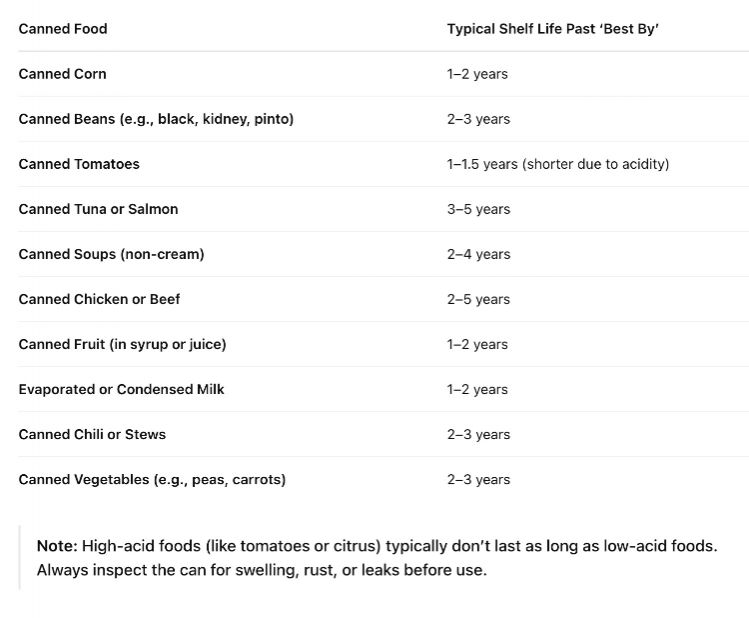
How Long Do Common Canned Foods Last Past the ‘Best By’ Date?
Below is a breakdown of typical shelf lives after the ‘Best By’ date for common canned foods, assuming proper storage (cool, dry location, and intact packaging):
Like Tips for the Home for more
Using Your Senses: How to Evaluate Food Safety
Even past the ‘Best By’ date, many canned goods remain safe to eat. Use this checklist:
Look: Check for bulging lids, rust, dents (especially on seams), or leakage.
Smell: Any sour, metallic, or rotten odors? Discard it.
Taste: If the can looks and smells fine, taste a small amount. If it tastes off, don’t eat it.
Storage Matters: How to Extend the Life of Your Food
The longevity of canned food depends heavily on how it’s stored:
Temperature: Store in a cool (50–70°F), dry place.
Humidity: Keep cans away from damp basements or warm garages.
Light: Avoid direct sunlight to prevent degradation of flavor and nutrients.
Proper storage can help many canned foods last far beyond their suggested dates.
The Environmental and Economic Cost of Food Waste
Throwing away food that’s still safe not only hits your wallet but also harms the environment. In the U.S., over 30% of all food is wasted annually, contributing to excess landfill use and greenhouse gas emissions. Misinterpreting date labels plays a major role in this.
Tips to Reduce Food Waste Through Better Label Literacy
Don’t panic about dates—they’re about quality, not safety.
Rotate pantry items so older products are used first (FIFO: First In, First Out).
Buy only what you need, especially with perishable goods.
Donate non-perishables nearing their ‘Best By’ date to local food banks if you won’t use them.
Conclusion: Be Smart About Shelf Life
Understanding the meaning of ‘Best By’ and ‘Best Before’ dates—especially for canned foods—can empower consumers to reduce waste, save money, and be more sustainable. By using your senses, practicing smart storage, and knowing typical shelf lives, you can confidently make the most out of your pantry staples.